One front door for support
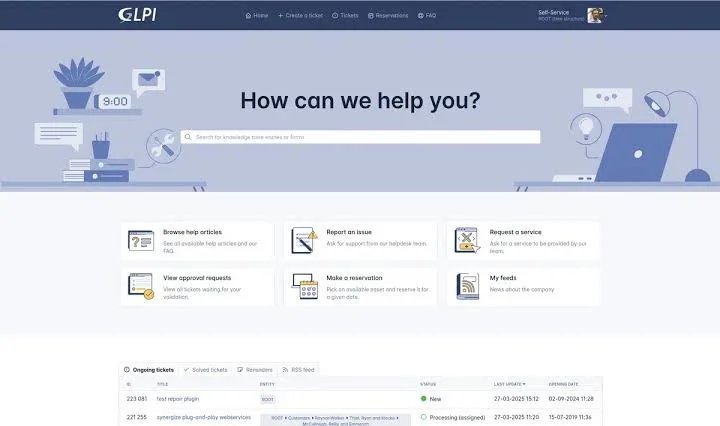
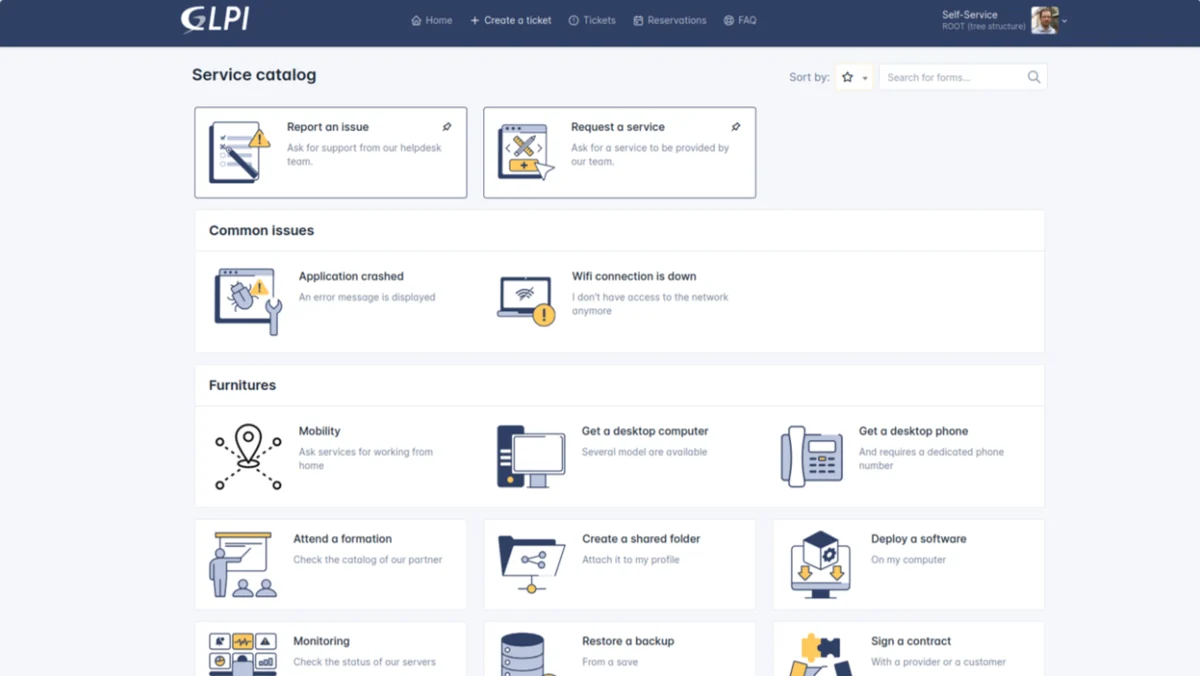
The portal can bring together issue reporting, service requests, equipment reservations, existing requests, and helpful articles. Users see what they can do and follow their requests without extra calls to technicians.
GLPI · ITSM + ITAM
GLPI brings together the service desk, incident and request management, asset records, contracts, knowledge, and reporting. POKO ITS designs it around your processes, puts it into operation, and helps your team adopt it in everyday work.
Talk to our GLPI team
GLPI Network Silver PartnerOfficial partner in SerbiaMORE THAN A TICKETING SYSTEM
When support is managed through email, spreadsheets, and verbal agreements, priorities depend on who happens to be available. Technicians repeat the same questions, users do not know the status, and management lacks reliable information about workload, deadlines, and recurring causes.
GLPI introduces a shared workflow. The user selects the right service or reports an incident, rules route the request, the technician receives asset context and prior history, and SLAs, tasks, and notifications keep resolution moving. Data from daily work then becomes the basis for service improvement.
THE USER EXPERIENCE
The self-service portal, service catalogue, forms, and knowledge base help users choose the right path without knowing the internal structure of the IT team.
The portal can bring together issue reporting, service requests, equipment reservations, existing requests, and helpful articles. Users see what they can do and follow their requests without extra calls to technicians.
Instead of a generic description field, the service catalogue guides the user through a purpose-built form. A request for a computer, application access, or data restoration can ask for the exact information required for approval and delivery.

THE SERVICE TEAM WORKSPACE
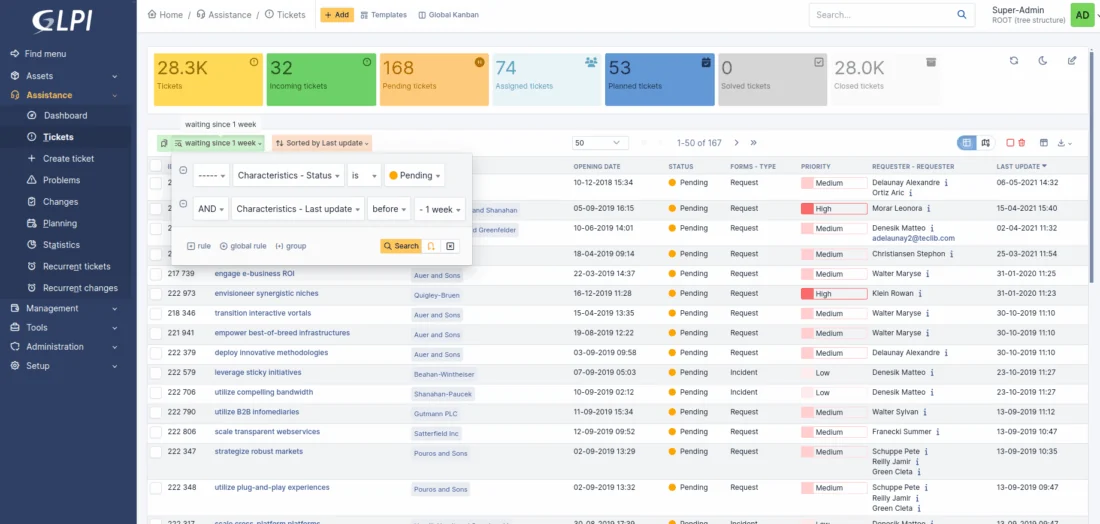
GLPI distinguishes incidents and requests and supports problems, changes, task planning, SLA rules, notifications, and statistics. Configuration is based on the processes the team can realistically maintain.
Technicians can filter requests by status, priority, date, group, category, or another relevant attribute. Tasks, planned work, solutions, and approvals remain attached to the same record, so handover between people does not depend on private messages.

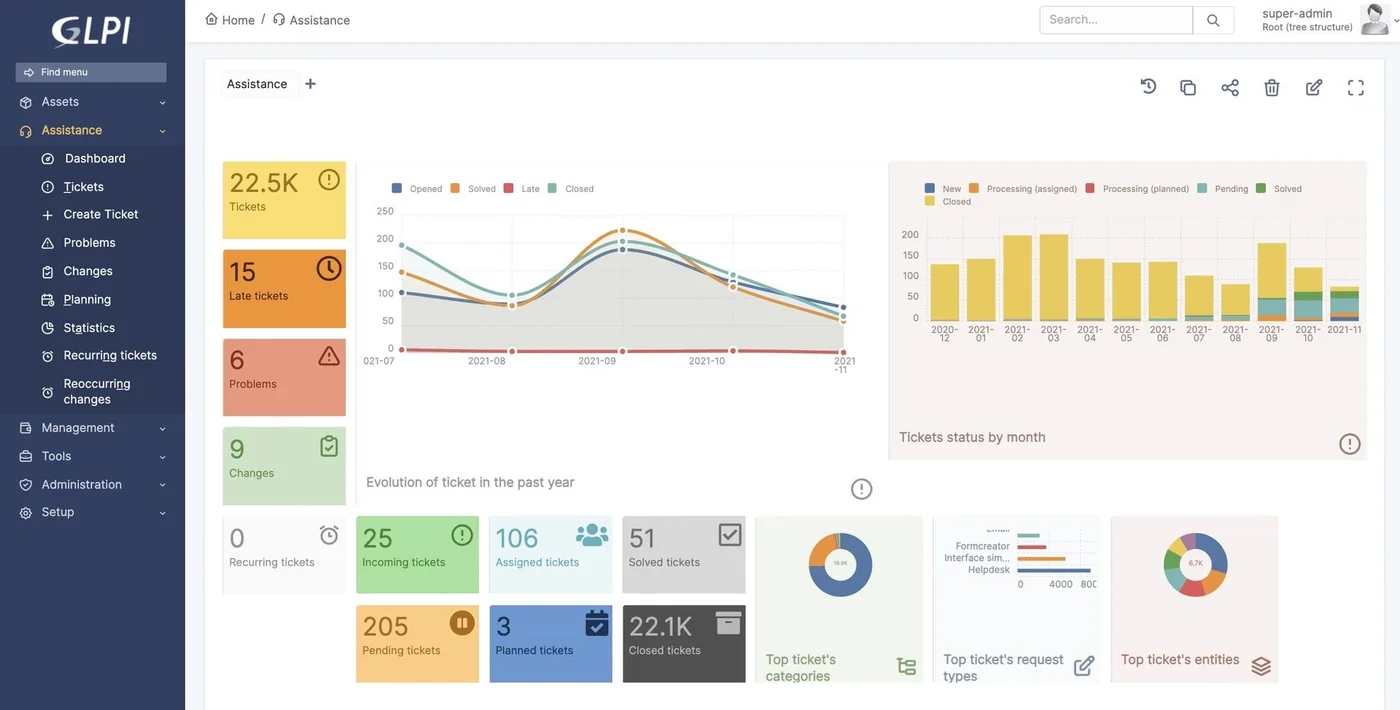
Dashboards and statistics show open, late, assigned, and solved requests, changes over time, and distribution by category or team. The goal is not more charts. It is information that reveals a bottleneck, rising demand, or a recurring issue.

CONNECTED ITSM AND ITAM
When requests are connected to a computer, software, network device, contract, or location, diagnosis and decisions gain fuller context.
Computers, monitors, printers, network equipment, phones, software, and licences can have an owner, location, status, and change history.
Contracts, suppliers, warranties, and related documents can be connected to assets and operational requests.
The knowledge base stores verified guidance for technicians and public FAQ articles for users who can solve a simple issue themselves.
Rules automate classification and assignment, an email receiver converts messages into requests, and directories can simplify user administration.
HOW POKO ITS IMPLEMENTS GLPI
We begin with processes and ownership, then build a configuration the team can understand, test, and evolve.
We map request sources, teams, users, deadlines, data issues, and expected outcomes.
We define categories, groups, roles, SLAs, catalogue, entities, and the IT asset model.
We configure the platform, rules, notifications, authentication, inventory, and the agreed initial data set.
Users and technicians work through real scenarios while administrators receive documentation and practical knowledge transfer.
After launch, we review the workflow, refine rules and dashboards, and plan the next improvements.

VERIFIED EXPERTISE
POKO ITS is an official GLPI Network Silver Partner in Serbia. The partnership is confirmed by Teclib, the publisher of GLPI, and the current certificate covers the partnership period through 5 April 2027. We approach a GLPI project as long-term improvement of processes, data, and ownership, supported by reliable technical implementation.
Verify on the GLPI partner directory ↗NO-OBLIGATION CONVERSATION
Describe the objective and current state. We will explain what is worth checking and what a realistic first step could look like.